 2% bank transfer discount
 EU delivery with FedEx
 Free shipping from €500
A coilover kit does not need the largest possible number of adjustments to suit your project. If you want to choose your ride height without adjusting the damper settings yourself, TEIN STREET BASIS Z deserves a place in your comparison. This guide explains which decision the series simplifies, which setup work still matters and how to distinguish the correct application from a vehicle with a similar name.
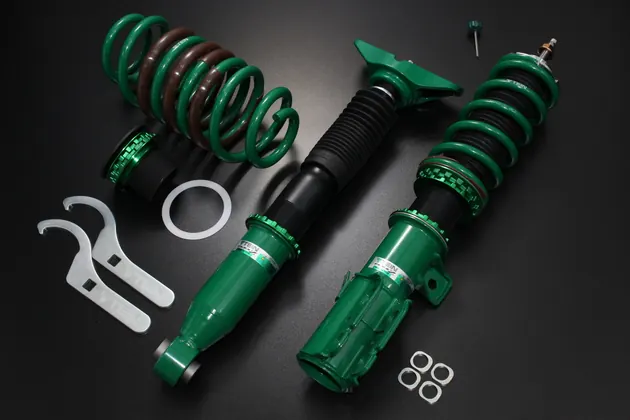
Choose the height and retain a fixed damper setting
STREET BASIS Z combines spring-seat height adjustment with fixed damping. Original upper mounts are reused and are not included in the kit. EDFC electronic damping adjustment is not provided. Keep that distinction clear before comparing prices: adjustable ride height does not automatically mean adjustable damping.
First define what you actually want to change. Are you looking for a more suitable vehicle height and a clearly specified suspension arrangement? Or do you want to switch between different damper settings? For the second objective, start with a series that explicitly offers damping adjustment. The TEIN coilover category helps you compare available applications without assuming that a general series photograph describes every component of your particular kit.
What fixed damping means in everyday use
With a fixed damper setting, you do not have to decide between different click positions. That can suit an owner who wants a properly configured suspension to use after installation, rather than a system for experimenting with settings. It does not mean every vehicle will feel equally comfortable. Tyres, wheels, vehicle weight, road surfaces and the condition of surrounding components all continue to influence the result.
Describe any existing problem precisely. A suspension that feels “too hard” might be transmitting a sharp impact, reaching a travel limit frequently or transferring excessive noise into the body. These are different observations. Recording them separately helps a workshop check whether wear or an unsuitable current setup contributes to the problem. New dampers are not a universal cure for every symptom on an older car.
Plan the height around the complete vehicle
Choose your target height according to the way you really use the car. A steep driveway transition, regular luggage or passengers in the rear seats may argue against a particularly low setting. Suitable clearance and usable suspension travel still matter. The lowest possible position is therefore not automatically the best choice for a car that needs to work reliably every day.
Before arranging installation, record the wheel and tyre combination you intend to use. Include any spacers and known modifications. An assessment made with winter wheels cannot automatically be applied to summer wheels of different dimensions. Agree with the workshop that clearance will be checked under the conditions specified for the application. The final setup belongs to the actual car, not a photograph of another owner’s vehicle.
Find the correct application step by step
Start with make and model, then select the version and production period. Read the complete application notes on the product page. Body style, drivetrain and engine must match wherever the listing restricts compatibility by those details. One model name can cover several technically different cars. Similar trim names do not establish that suspension components can be exchanged between them.
Our vehicle identification and fitment guide explains the information worth collecting. For example, the production date and first registration date are not necessarily the same. Also record the TEIN manufacturer part number of the offer you are considering. A question tied to that number is much easier to resolve accurately than a request for “coilovers for my model”.
Include the original mounts in your planning
Reusing existing mounts should be a checked decision. If they are worn or damaged, replacing other suspension components does not remove that underlying problem. Have their condition assessed before installation. You can then obtain any required replacements in advance instead of deciding halfway through the job whether old components should be fitted again.
Prepare a short parts list with the workshop: what is included, what will be reused and what needs to be ordered separately? Include fasteners that the applicable installation instructions require you to replace. Complete planning also makes price comparisons more useful. A lower kit price does not necessarily produce a lower total bill if other necessary work has not been included in the estimate.
Consider existing equipment and modifications
Cars with special factory suspension, electronically controlled dampers or previous modifications need additional checks. Do not assume every existing function will remain unchanged after any suspension replacement. The information for the exact application and any specified additional measures are decisive. If the available information does not answer an important question, resolve it before ordering rather than after the car has been dismantled.
The same applies to accessories that change the available space. Different mounts, wheels or suspension components may mean the vehicle no longer matches the configuration used for a standard application listing. Document those changes openly. This prevents a broadly correct model selection from being mistaken for approval of a particular modified combination that has never been checked.
A practical sequence for the installation
Arrange the fitment and parts checks first, followed by installation. The setup should follow the vehicle-specific documentation. Include clearance checks and the necessary assessment of wheel alignment in the plan. Any further inspection or documentation requirements depend on the particular kit and where the vehicle will be used. A series name alone cannot establish those requirements.
Record the completed setup using suitable measurement points, the date and the wheels fitted. That makes later changes easier to understand. Ask the workshop about inspection and care during continued use. Unusual noises, contact marks or a change in vehicle behaviour should be investigated rather than hidden by another height adjustment. Keep the installation documents with the vehicle’s other maintenance records.
When another solution deserves consideration
If the main objective is to replace worn dampers while largely retaining the existing height, also look at the TEIN shock absorber range. If you want direct control over damping, compare products explicitly described as adjustable. Our suspension guide helps you place springs, dampers and complete coilover kits in the context of your actual project.
A useful comparison is not a ranking in which the longest equipment list always wins. An adjustment you never use does not solve a problem you do not have. Equally, do not give up a feature you clearly need simply because another offer initially appears cheaper. The right choice brings together the application, equipment, installation requirements and the way you intend to use the car.
Common STREET BASIS Z questions
Can I add EDFC damping adjustment later?
This function is not provided for STREET BASIS Z. If adjusting damping from inside the car is part of your plan, choose a compatible application from the beginning. The EDFC guide explains the separate roles of the suspension, motors and controller.
Is there one lowering figure for every vehicle?
No. Use the figures for the exact product and its accompanying documentation. A value quoted for another model does not describe the available settings on your own car.
What should I include when asking for advice?
Provide the model, version, production period, drivetrain, relevant modifications and TEIN part number. Add the outcome you want, such as a practical daily driving height without adjustable damping. Those details make it possible to address the remaining question directly.