 2% bank transfer discount
 EU delivery with FedEx
 Free shipping from €500
Do you want to choose a suspension by the way the car behaves, rather than simply by how low it can sit? When considering TEIN MONO SPORT, define your intended use before ordering. This guide helps you understand the concept, compare settings meaningfully and turn a long list of possible adjustments into a practical plan for your own vehicle.
The basic technical concept
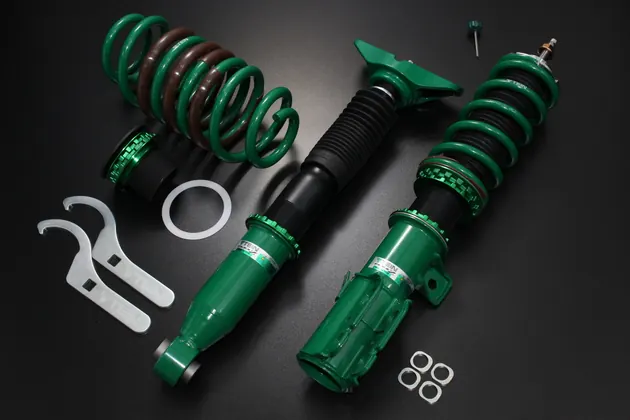
MONO SPORT combines monotube dampers, full-length height adjustment and 16 combined compression/rebound settings. Upper mounts depend on the application; some use original parts. Check the equipment of the exact product. A series name does not replace vehicle identification or a check of the components supplied.
Start with the correct application in the TEIN coilover category, then record the manufacturer part number. Only then compare individual features. Technical terms describe a concept; whether it suits your objective also depends on use, wheels, installation and setup. Our suspension guide explains the underlying difference between spring action and damping so that your comparison starts with clear priorities.
A use profile instead of a vague request for stiffness
Write down where you drive most often. A daily route with frequent short bumps creates different practical demands from occasional trips on predominantly smooth roads. Include longer journeys, luggage and passengers. These details are more useful than simply asking for the sportiest possible suspension, because “sporty” does not identify a measurable objective by itself.
Describe the behaviour you want to change. Is it slow settling after a disturbance, excessive movement during a load change or an unsuitable ride height? Record the observation without deciding on a single cause yourself. Tyres, wear, loading and wheel alignment can produce similar impressions. A professional condition check before modification helps avoid choosing new suspension to address a problem elsewhere on the car.
Compare monotube and twin-tube designs objectively
A damper’s construction is a technical characteristic, not a complete quality rating. Monotube and twin-tube designs differ internally, but their effect on the vehicle also depends on dimensions and calibration. The word “monotube” alone therefore establishes neither a particular comfort level nor a guaranteed improvement in every driving situation. Assess the complete application rather than treating one design label as the answer.
Compare complete product specifications wherever possible. Two isolated advertising statements from different product families do not create a fair comparison. For each offer, note the intended vehicles, adjustments, mounts and restrictions. That reveals whether the products are intended to solve the same problem or whether their different concepts already place emphasis on different priorities.
Assess height and damping separately
Ride height changes the body’s position relative to the wheels. Damping influences how suspension movements develop and settle over time. These functions work together but are not identical. If you make a large height change and select another damping setting simultaneously, it becomes difficult to identify which change caused a difference you subsequently feel.
Establish a suitable baseline using the vehicle-specific instructions. Check clearance, usable travel and the required wheel alignment. Further comparisons become useful only when that starting point is understood. A particularly low position and a particularly firm damper setting do not automatically form a balanced combination. Each must suit the car, its actual configuration and the way it is used.
Keep a straightforward setup record
A useful record does not require complicated software. Note the date, wheels and tyres, tyre pressures set according to the vehicle requirements, loading, ride height and damper positions. Add a short description of the conditions. Use the same appropriate measuring points each time, and follow the particular kit’s instructions when identifying and recording its adjustment positions.
Then change only one clearly identified parameter and document the difference. Compare under safe, permitted and reasonably similar conditions. Public traffic is not a setting for exploring handling limits. If a change cannot be assessed clearly, return to a documented suitable baseline and discuss your observations with a qualified workshop instead of repeatedly choosing more extreme settings.
Mounts affect the overall decision
Upper mounts deserve more attention than a simple check that they are in the box. Their construction, condition and intended function belong in the comparison. Different mounting concepts can affect how noise and movement are isolated from the vehicle body. Check the exact product to establish which type is supplied; a photograph of another application is not enough.
At the same time, identify any existing components that will be retained. New springs and dampers do not restore a worn mount or joint. Plan necessary replacements and any new fasteners required by the fitting instructions before the installation appointment. This gives you a realistic overall project instead of an estimate based solely on the price of the coilover kit.
Check vehicle details before ordering
Make, model and production period provide the starting point. Then consider version, body style, drivetrain, engine and every restriction in the application notes. References to all-wheel drive, factory suspension or special equipment must not be ignored because the model name looks similar. A modified car must also be assessed with its actual components rather than its original sales description alone.
The vehicle fitment guide helps you collect these details. A category assignment assists the search; it is not blanket approval for every combination. If an important detail is missing, record that question together with the TEIN part number. This is more productive than comparing several similar offers while the vehicle’s exact specification remains unresolved.
Plan installation, inspection and ongoing support
Before ordering, check which documents exist for your vehicle and intended use. A product name does not establish general road approval for every application. Agree the necessary checks and work with the installer, including clearance and alignment. Additional requirements depend on the particular documentation and the place where the vehicle will be used.
Also discuss support after installation. Who will investigate unexpected noises, who records a revised height and where will the settings be kept? A clear handover containing component documents and measurements is more useful than a verbal statement that the car now has a “sport setup”. Those details remain available if a different workshop maintains the vehicle later.
Make an informed decision about electronic control
If you want to adjust damping from inside the car, verify compatibility of the exact suspension, motors and controller combination. The EDFC guide explains what those components do. Another way to operate the dampers does not replace a correct baseline setup or resolve uncertain vehicle fitment.
Plan the desired function before installation wherever possible. Access, available space and any required wiring can then be included in the workshop plan. Do not buy an accessory solely because it has a familiar connector or carries a recognised series name. Confirmed compatibility of the relevant components is what matters.
Three questions to complete your decision
Does the product fit my actual vehicle?
Compare the complete application and all its notes. Record modifications and resolve any remaining restrictions before purchasing.
Will I use the adjustments provided?
If you intend to tune height and damping, allow time for a documented process. More adjustment options become useful when you understand how you will apply them.
Is the complete installation prepared?
Include mounts, fasteners, fitting, alignment and the necessary documents. You can then compare complete solutions and understand what has been set after the work is finished.