 2% bank transfer discount
 EU delivery with FedEx
 Free shipping from €500
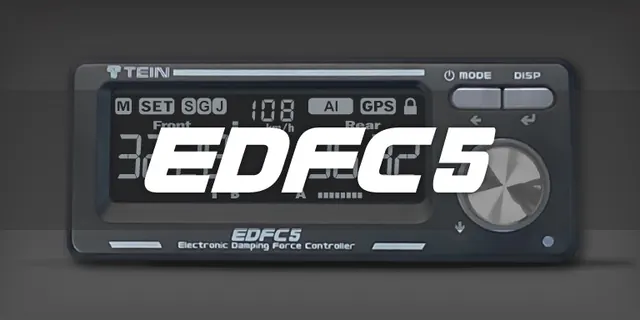
TEIN EDFC5 and EDFC ACTIVE PRO
TEIN EDFC brings damping adjustment for compatible TEIN shock absorbers into the cabin. A successful installation starts with the right combination of suspension, controller, motor kit and available space. Use this guide to plan your system and compare EDFC5 with EDFC ACTIVE PRO.
What does electronic damping adjustment actually change?
A spring supports load and allows the wheel to move relative to the body. A damper influences the speed and settling of that movement. An adjustable damper provides a defined adjustment range, and EDFC operates its adjustment mechanism through compatible motors. It does not replace a spring, change its spring rate or automatically change ride height. If your aim is to lower your car, start by choosing suitable suspension or springs. If you want more convenient access to an existing damping adjustment, EDFC is the relevant addition.
Separate three questions when planning: does the suspension fit the vehicle mechanically, is that exact application approved for EDFC, and can the necessary components be installed in the available space? Answering the first question does not settle the other two. Our vehicle fitment guide helps you bring together chassis codes, production dates and installation notes before you order.
EDFC5 and EDFC ACTIVE PRO at a glance
EDFC5 includes jerk-responsive adjustment and a learning function. EDFC ACTIVE PRO supports individual adjustment of four dampers and automatic operating modes. Both require compatible TEIN dampers. See the manufacturer's details for EDFC5 and EDFC ACTIVE PRO.
Choose a generation according to your intended use and documented compatibility. If you mainly want to switch between a few settings that work well for your car, clear operation matters more than a long feature list. If you want to develop automatic settings, allow time for configuration, recording and evaluation. Electronic control does not make an arbitrary starting setup suitable. Tyres, vehicle load, suspension condition and the mechanical setup remain part of the overall result.
Build your shopping list around the suspension part number
Start with the manufacturer's part number on your suspension. Find the EDFC components explicitly listed for that application. You can then check controllers, the matching motor kit and required extensions separately. Compare part numbers instead of ordering by similar product photographs. A photograph may show a system arrangement, while the description of the individual offer defines what is supplied.
A controller alone is neither a complete suspension system nor necessarily a complete installation kit. Motor sizes, mounting arrangements, cable routing and additional parts must match the application. If you already own an EDFC system, identify the generation and part numbers of its components before replacing anything. This helps avoid buying duplicate parts or combining versions whose compatibility has not been established.
Check space and access before planning the installation
Manual damping adjusters may sit behind trim, particularly at the rear of a vehicle. Electronic operation can be attractive in that situation, but a motor still needs physical space at the adjuster. A cover, seat component or nearby structure may affect the installation. Those details must be checked for the actual vehicle and suspension combination. A damper's vehicle application therefore does not automatically confirm enough room for its EDFC components.
Discuss the position of the controller, cables and related components with the workshop carrying out the work. The display should be readable without obstructing your view or existing controls. Cables must not rub against sharp edges or be strained by moving parts. Follow the instructions supplied for the actual components when arranging mounting, electrical connections and commissioning. This overview is a planning guide rather than an electrical wiring procedure.
Develop settings you can understand and repeat
First write down what you want to improve. A description such as “a less abrupt response to short bumps” is more useful than simply “softer”. Continued body movement, a sharp impact over an edge and instability when carrying luggage are different observations. They may have different causes. Worn mounts, unsuitable tyre pressure or an inappropriate ride height cannot reliably be corrected through electronic damping adjustment.
After professional installation, begin with the recommended starting setup. Record the settings at the front and rear, the operating mode, tyres, vehicle load and your observations. Change one identifiable parameter at a time. Changing several settings together makes it difficult to understand which change helped or made the result worse. Compare under similar conditions where possible and return to the recorded starting setup if the outcome is unclear. Configure the system while stationary so that your attention remains on driving in traffic.
Keep a simple record that the workshop can also understand. Include the date and explain whether you changed hardware or only a setting. A new wheel and tyre combination, different passenger load or replacement suspension component can change the comparison. Recording these details gives you a useful history and makes later troubleshooting more focused than trying to remember how the car felt several weeks earlier.
Can EDFC work with EnduraPro PLUS or coilovers?
The product family is a starting point; the exact TEIN application remains decisive. Check the EDFC entry and every associated note for the shock absorber kit or coilovers you intend to buy. A similar-looking product or another car within the same model family is not sufficient evidence. With used suspension, also make sure the identification is readable and the components correspond to the stated version.
Our EnduraPro and EnduraPro PLUS comparison explains the distinction between fixed and adjustable damping. The suspension guide helps with the wider choice between springs, replacement dampers and coilovers. Once you have chosen the suspension approach, use the individual listing to identify the correct electronic components. Buying a controller cannot create a mechanical adjustment facility inside a non-adjustable damper.
Questions to settle before ordering
Is a motor kit included with the controller?
Check the stated contents of the individual offer. Match the controller, motor kit and additional parts by their part numbers. A system photograph does not promise that every illustrated component is included. For an upgrade, first list the components you already own so you can distinguish reusable parts from the items still required.
Can I copy settings from another vehicle?
Someone else's setup record can be a useful example of how to document a process. It is not an approval for your car. Vehicle weight, tyres, springs, damper version and intended use may differ. Work from the specified starting point for your own combination and evaluate changes on that vehicle.
What information makes a compatibility enquiry useful?
Send your model, production period, TEIN suspension part number and the identifiers of any existing EDFC components. A photograph of the adjuster area may help explain an installation-space question. Tell us whether you need to clarify compatibility, package contents or operation. That makes an enquiry more precise than providing only a model name.
Browse EDFC components · Read the EDFC introduction · Shipping and delivery