 2% bank transfer discount
 EU delivery with FedEx
 Free shipping from €500
Regular circuit use requires more than a list of suspension features that sound competitive. What matters is whether the vehicle, tyres, driver and settings can be assessed as one coherent system. TEIN MONO RACING belongs in that focused comparison. This guide helps you prepare an informed purchase and document later changes so that they produce useful observations rather than a collection of impressions.
Place the technology in context
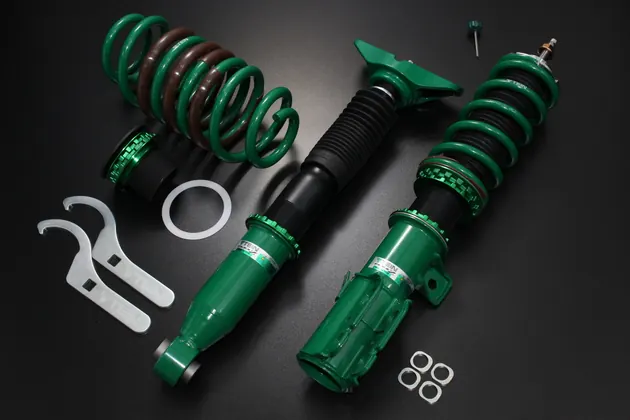
MONO RACING combines monotube construction, full-length height adjustment and 16 combined compression/rebound settings. Geometry adjustments depend on the application. Check equipment and restrictions using the exact part number. The series name does not establish universal equipment or general road approval for every car.
First find your vehicle in the coilover range, then compare complete application descriptions. Another product family may cover a similar vehicle while pursuing a different use concept. Our suspension guide explains the basic functions so that spring characteristics, damping and height adjustment remain distinct parts of your comparison.
Define the intended use before choosing components
Describe how the car will be used. Is it a daily driver attending occasional events or a vehicle built mainly for organised circuit sessions? Include travel to the venue, loading and the tyres you intend to run. These differences influence the sensible overall configuration. A motorsport label does not tell you which compromises you want to make with your own vehicle.
Then define an objective you can assess. “Faster” is not very useful on its own because experience, circuit knowledge, tyres and conditions influence the outcome. Concrete observations in repeatable situations are more helpful, such as an unsettled response to a particular surface change. Describe the behaviour before committing to one presumed technical explanation for it.
Document the current vehicle condition
A new component can be judged fairly only if the starting condition is known. Record wheel and tyre sizes, ride height, existing mounts, significant modifications and the condition of wearing parts. Have unexplained noises or play in the suspension investigated. A damaged joint remains a problem even when a more sophisticated damper is installed beside it.
Add any existing alignment reports. If they are old or the car has been modified since the measurements were taken, they may no longer describe its present condition. Every record should therefore include a date and the wheels used at that time. This prevents comparisons between configurations that appear identical on paper but are different in practice.
Do not reduce geometry to one number
Camber, toe and caster describe different geometric relationships. Changes should not be chosen from a photograph or a recommendation for another car. Suitable and permitted values depend on the entire application. The available adjustments must also be checked on the actual vehicle and the components supplied, rather than assumed from a general description of the series.
Discuss with a qualified workshop which measurements are needed before and after installation. Have the results recorded and associated clearly with the relevant setup. A wide adjustment range is not an instruction to use all of it. It is a technical possibility whose use must suit the vehicle, tyres, intended operation and applicable requirements.
Include tyres in every suspension comparison
Suspension does not work independently of tyres. Construction, condition, size and appropriate operating conditions influence the feedback. If new tyres and a different suspension are installed together, a subsequent improvement cannot be attributed cleanly to the suspension alone. Record exactly which changes were made before each comparison so that you understand what the observation can actually show.
Use the checks and guidance appropriate to the tyre, vehicle and intended use. A general product guide cannot provide universal pressure or temperature values. For organised events, include the venue’s requirements and qualified support in your planning. Comparisons become more useful when the conditions are understood and several unknown factors are not changing simultaneously.
Start with a clear baseline
The initial setup should follow the specific kit documentation and a professional assessment. Record height, alignment and damper positions before evaluating adjustments. This preserves a suitable starting point. Without written records, a sequence of small changes can quickly create a configuration that nobody can confidently explain or reproduce at a later appointment.
When assessing changes, alter only one clearly named parameter. Record the reason, the exact adjustment and the observed effect. If conditions differ substantially, label the comparison as limited. A faster lap in different conditions does not by itself demonstrate that a particular adjustment works better in general. Separate what you measured from what you are assuming.
Make feedback understandable
Useful feedback explains when and where something happened. State the driving situation, the type of surface disturbance and whether the observation was repeatable. Keep perception separate from interpretation. “The car feels unsettled during the transition” is an observation; assigning that feeling to a specific component or setting requires further assessment rather than an immediate conclusion.
The driver is also part of the comparison. Different inputs or speeds can change the result. Allow time to become familiar with a configuration rather than answering every uncertainty with another adjustment. Testing near handling limits belongs only in a suitable, permitted and appropriately supervised environment. Public roads and ordinary traffic are not suitable for that work.
Check installation requirements and accessories together
Before the appointment, establish which mounts and fasteners are supplied and which must be obtained separately. Include any existing components that will be reused. Information for another vehicle or a general series photograph cannot establish the contents. Use the product description, installation instructions and the actual manufacturer part number ordered for your car.
Electronic damping operation requires confirmation of the specific suspension, motor and controller combination. The EDFC guide explains those roles. Easier operation does not replace a baseline setup or a record of changes. Access and space requirements should also be clear in advance, so extra components are not improvised halfway through installation.
Confirm fitment and documentation separately
Check make, model, version, production period, body style, drivetrain and every application note. Our fitment guide helps with that process. A listed vehicle does not automatically include every modification or equipment variant. On an already modified car, the actual configuration matters more than the original model description alone.
Also check the documents required for the intended use. Physical compatibility and the requirements for public-road use are separate questions. An event may have its own technical rules as well. Resolve those issues before ordering and allow time for any necessary inspections. A product name cannot stand in for documents that are missing from the application.
Support still matters after installation
Keep fitting instructions, measurement reports and setup records together. Agree how inspections after demanding use and unusual observations will be handled. Contact marks, loose components or an unexplained change in behaviour require professional investigation first. They should not be disguised by further experiments with settings or treated as an inevitable characteristic of a modified vehicle.
When asking for help, provide the TEIN part number, vehicle details and a short description of the current configuration. Add your setup record and the specific question you want answered. That turns a general request for the “best racing suspension” into a practical discussion about your car, your use and the next justified step.