 2% bank transfer discount
 EU delivery with FedEx
 Free shipping from €500
Want to change ride height and choose your own damping setting? TEIN STREET ADVANCE Z brings these two requirements together in a vehicle-specific coilover range. This guide helps you compare applications, plan installation and understand why height adjustment, spring rate and damping are separate decisions.
Understanding the range
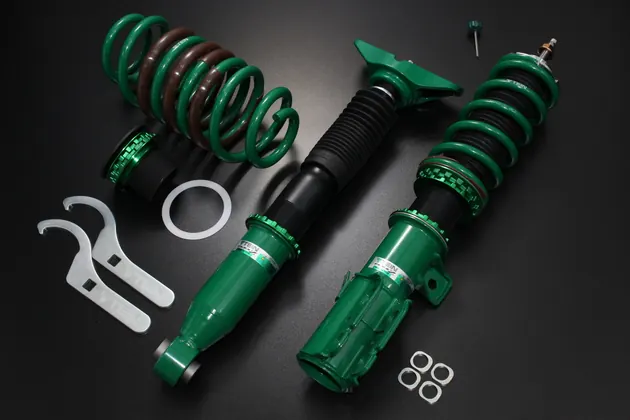
STREET ADVANCE Z provides spring-platform height adjustment and 16 damping settings. It uses original upper mounts, which are not included. Optional EDFC compatibility depends on the application. Always check the particular item rather than relying on the range name alone.
Start with your vehicle in our coilover category, then record the relevant manufacturer part number. This makes it easier to compare the same specification when discussing your plans with a workshop. Similar names do not establish interchangeability. STREET ADVANCE Z, STREET ADVANCE Z4 and other versions must be checked separately because a small difference in the name can identify a different application or purpose.
Set a realistic ride-height goal
Height adjustment does not mean every desired stance is suitable for everyday driving. Tyre clearance, remaining suspension travel, ground clearance and the particular axle layout all matter. Choose your target using the vehicle data and product instructions. The lowest mechanically possible position is not automatically the correct setting for your use. Include regular garage entrances, parking ramps and the roads you actually drive when deciding what a practical result looks like.
Discuss a repeatable measurement method with your workshop. Photographs taken from different angles or measurements on uneven ground make comparisons difficult. Defined measurement points, a level surface and a comparable load provide a more useful record. Confirm the wheel and tyre combination that will remain on the car. Changing it later may require another clearance check even if the suspension height itself has not changed.
Damping adjustment does not change the spring rate
The spring supports the vehicle while allowing the suspension to move. The damper influences the speed and settling of those movements. Adjusting damping does not replace the spring or simply change its rate. People often describe both effects as making a car harder or softer, but that language can hide important differences. Separate your preferred height, spring characteristics and damping behaviour when comparing specifications.
A firmer damping setting is not automatically a better setting. A useful road setup suits the car, its condition and the intended use. Record changes and compare them under similar conditions. If you alter tyre pressures, height and damping at the same time, it becomes difficult to identify which change produced the result. Unusual noises or unpredictable behaviour should be investigated properly instead of being hidden by further adjustment.
Identify the exact vehicle
Select the manufacturer, model, version and production period. Then compare the product notes with the actual car. Drivetrain, body style, engine and factory equipment can all affect the application. A familiar model name is insufficient if it covers several different configurations. Restrictions such as excluding four-wheel drive or particular original suspension systems must be considered in full.
First registration may be later than production. This distinction becomes especially useful around a model change. Our vehicle fitment guide helps you gather the relevant information. A category match makes searching easier, but it does not provide missing manufacturer approval. For a modified vehicle, also record the springs, mounts, suspension components and other changes already fitted. The present configuration matters more than an assumption that everything remains standard.
Plan for existing mounts and wear items
Any component intended for reuse needs to be in suitable condition as well as the correct specification. Ask the workshop to inspect mounts, fasteners and nearby parts. A new suspension kit will not repair a worn joint. Tyre damage and incorrect alignment can also affect the result even when the new parts have been selected correctly. Establishing the car’s condition before fitting helps separate pre-existing problems from later setup questions.
Make a list of supplied items and any additional parts required for installation. Check which fasteners must be renewed according to the applicable instructions. This reduces the chance of discovering a missing essential component while the car is already dismantled. Do not infer the package contents from a photograph. Use the description and documentation for the exact kit that you are ordering.
Consider electronic control separately
Electronic operation is a decision about convenience and the compatibility of a specific combination. Before purchasing a controller, establish which supporting components the car needs and whether the installation has sufficient space. An adjustable damper alone does not confirm every motor, controller and mounting arrangement. Our EDFC guide explains the roles of these different components so that you can plan the complete system.
Consider how frequently you expect to change settings. Someone who finds a suitable baseline and rarely changes it may value remote operation differently from someone who regularly considers varying vehicle loads. Choose according to your own requirements. Extra functions should have a clear purpose rather than being added simply because they appear in an accessories list. Confirm the actual application before treating an optional feature as part of your purchase plan.
Prepare the installation appointment
Give the workshop the part number, complete vehicle information and intended height before the appointment. Installation must follow the instructions for both the vehicle and the product. Appropriate tools, specified tightening values and the correct sequence of work are all part of a competent installation. This guide is not a fitting manual. Its purpose is to help you arrive with a clear and practical brief.
After installation, clearances, fixings and the required settings need to be checked. Establish which alignment work and further inspections apply to your particular combination. Keep measurement records, component references and documentation together. If you make changes later, a recorded baseline is much more useful than remembering that the car previously sat at approximately a certain height. It also helps the workshop understand what has changed.
Care and later adjustments
Suspension components operate in an area exposed to dirt, water and potentially road salt. Follow the manufacturer’s care instructions and have visible damage investigated. Before making a later adjustment, assess the condition of the relevant parts. Forcing a dirty or damaged connection is not a sensible shortcut. Record subsequent alterations so that the current setup remains understandable when servicing the car or discussing a problem.
Compare the complete project
Compare total costs, including fitting, any necessary wear items and subsequent work. If your goal is to retain the current height, vehicle-specific replacement shock absorbers may be a more relevant starting point. If you mainly want a specified lowering application, our suspension comparison guide helps you consider the alternatives. A suitable set of functions matters more than the longest specification list.
Your next step
Open the coilover selection and check the STREET ADVANCE Z application for your vehicle. Compare fitment notes, supplied components and current availability on the actual item page. Our delivery information explains destinations and charges, while payment information covers the available payment methods. If a product question remains, send your vehicle details and the exact TEIN part number to [email protected].